| Muby Chemicals and a few more manufacturing units are in Mubychem Group, the pioneer manufacturer of Zinc Chloride, Calcium Chloride, Potassium Chloride, Sodium Acetate, Sodium Thiosulphate, Ammonium Chloride, & Pharmaceutical Chemicals in India since 1976. Currently we have manufacturing facilities spread across Western India. No other vendor in the world knows Potassium Chloride any better than we do. We are exporters to all the countries across the globe. | |
(FDA) GMP GLP Approved, ISO-9001 Certificate, "REACH" registered, ISO-22000, Kosher Certified, Halal Certified, HACCP |
 --
-- 

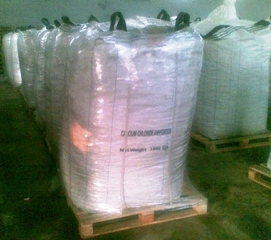
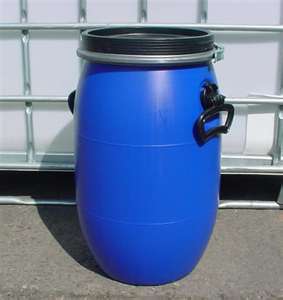

Potassium Chloride KCl Manufacturers, Uses
CAS Number 7447-40-7
Potassium Chloride Manufacturers
Potassium Chloride BP IP Manufacturers
Potassium Chloride ACS AR Grade Manufacturers
Potassium Chloride USP FCC Food Grade Manufacturers

The majority of the potassium chloride produced is used for making fertilizer, since the growth of many plants is limited by their potassium intake. As a chemical feedstock it is used for the manufacture of potassium hydroxide and potassium metal. Potassium chloride is also used in medicine, scientific applications, food processing, as a sodium-free substitute for table salt (sodium chloride), and in judicial execution through lethal injection. It is sometimes used in water as a completion fluid in oil and gas operations. It is also used as an alternative to sodium chloride in household water softener units. It is useful as a beta radiation source for calibration of radiation monitoring equipment because natural potassium contains 0.0118% of the isotope 40K. One kilogram of Potassium chloride yields 16350 becquerels of radiation consisting of 89.28% beta and 10.72% gamma with 1.46083 MeV. It makes up 70% of Ace Hardware's allegedly pet and vegetarian friendly "Ice Melt" though inferior in melting quality to calcium chloride (0°F v. -25°F). It is also used in Dasani water.
It was once used as a fire extinguishing agent, used in portable and wheeled fire extinguishers. Known as Super-K dry chemical, it was more effective than sodium bicarbonate-based dry chemicals and was compatible with protein foam. This agent fell out of favor with the introduction of potassium bicarbonate (Purple-K) dry chemical in the late 60s, which was much less corrosive and more effective. Rated for B and C fires.
It is also an optical crystal with a wide transmission range from 210 nm to 20 µm. It was formerly often used in the infrared spectrum range, and still is from time to time. While cheap, Potassium chloride (KCl) crystal is hygroscopic. This limits its application to protected environments or short term uses such as prototyping. Exposed to free air Potassium chloride (KCl) optics will "rot". Today, much tougher crystals like ZnSe have replaced it for IR spectral range applications.
Optical data:
Transmission range: 210 nm to 20 µm
Transmittivity = 92% @ 450 nm and rises linearly to 94%
@ 16 µm
Refractive Index = 1.456 @ 10 µm
Reflection Loss = 6.8% @ 10 µm (two surfaces)
dN/dT (expansion coefficient)= −33.2×10⁻⁶/°C
dL/dT (refractive index gradient)= 40×10−6/°C
Coefficient of absorption: 0.001 cm−1
Thermal conductivity = 0.036 W/(cm·K):
Damage threshold (Newman & Novak): 4 GW/cm2
or 2 J/cm2 (0.5 or 1 ns pulse rate)
Damage threshold (Kovalev & Faizullov)= 4.2 J/cm2
(1.7 ns pulse rate)
It has also been used to create heat packs which employ exothermic chemical reactions, but these are no longer being created due to cheaper and more efficient methods such as the oxidation of metals ('Hot Hands', one time use products) or the crystallization of sodium acetate (multiple use products).
A very bulk use of Potassium chloride is in mines and Oil Drilling muds and chemicals. Biological and medical properties
Potassium is vital in the human body and oral potassium chloride is the common means to replenish it, although it can also be diluted and given intravenously (of course, in concentrations much lower than those used in executions). It can be used as a salt substitute for food, but due to its weak, bitter, unsalty flavor, it is usually mixed with regular salt (sodium chloride), for this purpose to improve the taste (for example, in Morton Lite Salt. Medically it is used in the treatment of hypokalemia and associated conditions, for digitalis poisoning, and as an electrolyte replenisher. Brand names include K-Dur, Klor-Con, Micro-K, and Kaon Cl. Side effects can include gastrointestinal discomfort including nausea and vomiting, diarrhea and bleeding of the digestive tract. Overdoses cause hyperkalemia which can lead to paresthesia, cardiac conduction blocks, fibrillation, arrhythmias, and sclerosis.
Dr.Jack Kevorkian's thanatron machine injected a lethal dose of potassium chloride into the patient, which caused the heart to stop functioning, after a sodium thiopental-induced coma was achieved. A similar device, the German 'Perfusor', also uses it as a suicide aid.
Potassium Chloride - Clinical Pharmacology
The potassium ion is the principal intracellular cation of most body tissues. Potassium ions participate in a number of essential physiological processes including the maintenance of intracellular tonicity; the transmission of nerve impulses; the contraction of cardiac, skeletal, and smooth muscle; and the maintenance of normal renal function.
Potassium Chloride Manufacturers at:
MUBY CHEMICALS
S-8, SARIFA MANSION, 2ND FLANK ROAD,
CHINCHBUNDER, MUMBAI 400009, INDIA
TEL: (OFFICE)
91-22-23770100, 23726950, 23774610, 23723564. FAX: 91-22-23728264
Email: info@mubychem.com
USA & Canadian Customers may Call 773-829-5811

Copyright
and Usual
Disclaimer
is Applicable
Last
updated:
28.02.22
Exporters to USA Canada UAE Europe South Africa Tanzania Kenya Uganda Egypt Nigeria Turkey Brazil Chile Argentina Dubai Cameroon Guatemala Mexico Peru ---
IT IS NICE TO BE IMPORTANT BUT ….... BUT IT IS MORE IMPORTANT TO BE NICE
I shall pass through this world, but once. If therefore, there is any good that I can do, or if there is any favour that I can show to a fellow human being, let me do it now. Let me not defer or neglect it. For I shall not tread this way again.